
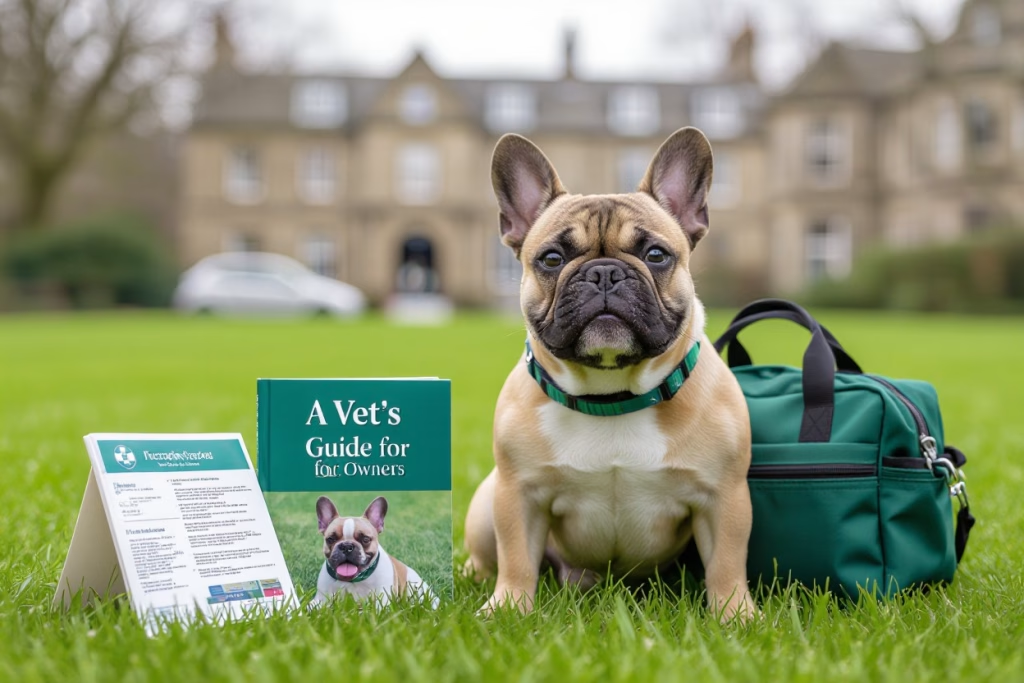
Welcome to the World of French Bulldogs
At our clinics in Knaresborough and Harrogate we often see French Bulldogs; compact dogs weighing typically 8–14 kg with a lifespan around 10–12 years. You’ll appreciate their low-to-moderate exercise needs (roughly 20–40 minutes daily) and suitability for first-time owners, yet be alert to brachycephalic breathing and overheating risks. Their adaptability makes them as happy in a flat as a house with a garden when you manage weight, training and temperature carefully.
Cherished Companions: Why French Bulldogs Are a Popular Choice
Their affectionate, clownish nature wins owners—you’ll get a sociable companion that thrives on human company and very little grooming. Widely owned across the UK, they suit apartment life and families with children but can show stubbornness and separation anxiety; short, consistent training sessions of 20–30 minutes daily and early socialisation reduce common behaviour issues. You should prioritise routine, positive reinforcement and controlled social exposure to get the best from your dog.
The Unique Appeal of French Bulldogs in Harrogate & Wetherby
Local green spaces like Harlow Carr Gardens, Nidd Gorge and the riverside cafés by Abbey Road match the French Bulldog’s moderate activity needs, letting you enjoy short, enriching walks without overexertion. You’ll spot many at our Harrogate and Knaresborough practices after a morning at Jacob Smith Park or a gentle stroll around Knaresborough Castle. Pay attention to weather and steep terrain—heat and heavy panting are warning signs.
From casework at our Harrogate clinic, owners who walk their French Bulldog during cooler hours—before 10am or after 6pm in summer—report fewer breathing incidents; a practical guideline is keeping walks to under 30 minutes on warm days and choosing flat routes like Abbey Road riverside rather than steep Nidd Gorge sections. Carry a collapsible bowl, monitor your dog’s breathing rate and avoid prolonged pavement contact above 20°C to lower the risk of heatstroke.
Size, Energy, and Lifestyle Compatibility
French Bulldogs typically weigh between 8–14 kg (18–31 lbs) and stand around 28–33 cm; their compact, muscular build and low-to-moderate energy means you can meet exercise needs with 20–40 minutes daily. You’ll find they adapt well to flats and small gardens, and we often see French Bulldogs at our clinics in Knaresborough and Harrogate presenting as happy city pets—but watch for breathing and overheating risks on hot days.
Understanding the Physical Attributes of French Bulldogs
Short muzzles and wide heads create the breed’s signature look, but also predispose them to brachycephalic airway syndrome, snoring and exercise intolerance; you should expect noisy breathing and plan short, gentle walks. Muscle mass around the shoulders can mask weight gain, so monitor body condition (ribs palpable under light fat) and aim for regular vet checks to spot respiratory or joint issues early.
Ideal Living Conditions: Families, Flats, and Active Homes
Families benefit from a Frenchie’s sociable, people-focused nature—good with children when supervised—and flats suit them because they don’t need large yards; active homes should note they’re not built for long runs or high-altitude hikes. You’ll want a cool, well-ventilated space, avoidance of excessive stairs for young pups, and daily mental enrichment like puzzle toys or short sniffing walks.
In Harrogate, owners living near Abbey Road or the riverside often combine two 15–20 minute walks with café stops, which matches the breed’s stamina; at our Knaresborough practice we see dogs from top-floor flats struggling without lifts after long walks. Limit continuous exertion to under 30 minutes in warm weather, watch for excessive panting, collapse or blue gums as signs of heat stress, and give frequent water and cool rest breaks.
Decoding Their Quirks: Behaviour and Temperament
Expect French Bulldogs to blend affectionate, clownish behaviour with surprising stubborn streaks; we often see French Bulldogs at our clinics in Knaresborough and Harrogate presenting as very people-driven yet anxious in new situations. Short play bursts suit their low–moderate energy and their brachycephalic anatomy means heat and heavy exercise can trigger respiratory distress. You’ll notice strong attachment to family members, variable tolerance of strangers, and a tendency to test boundaries without firm, consistent training.
Unpacking the Personality Traits of French Bulldogs
Compact and alert, most French Bulldogs weigh 8–14 kg and prefer structured, short activities over long runs. You’ll find them affectionate, often seeking laps and company, while showing stubborn responses to repetitive commands; at our Harrogate clinic a 3-year-old responded best to 5–10 minute reward-based sessions. Many are moderately vocal—more grunts and snorts than constant barking—but anxiety can increase reactivity if not managed early.
Social Needs: How to Integrate Them into Family Life
French Bulldogs thrive on close human contact, so your household routine should avoid leaving them alone for extended periods—aim to keep alone time under 4 hours to reduce risk of separation anxiety. You can successfully integrate one into family life with supervised interactions around children, clear boundaries for furniture and feeding, and predictable daily walks; they suit flats and gardens alike provided you meet their social and mental needs.
Start socialisation between 8–16 weeks with short, controlled exposures to people, pets and busy local spots like Jacob Smith Park or riverside cafés. Use gradual desensitisation and crate-positive methods, build alone-time in 10–15 minute increments, and use 5–10 minute reward-based training bursts to counter stubbornness. At our Knaresborough practice we recommend supervised meet-and-greets at Hay-a-Park to gauge dog-to-dog tolerance and tailor a family plan.

Keeping Your French Bulldog Happy: Exercise Essentials
You’ll get the best results with short, regular activity: aim for two walks of about 20–30 minutes plus five- to ten‑minute play or training bursts to provide mental stimulation. Puppies need gentler, frequent outings and interactive toys; adults benefit from scent work and short recall games. Monitor breathing closely—brachycephalic airways make overheating and overexertion dangerous—so plan walks for cool parts of the day and always carry water.
Daily Exercise Requirements for French Bulldogs
Puppies: follow the 5‑minutes‑per‑month‑of‑age guideline per walk (e.g., a 4‑month pup 20 minutes total); adults: two moderate walks of 20–30 minutes plus short play sessions or training for 10–15 minutes. Include leash walks, nose work and gentle stair avoidance. Stop if your dog pants heavily, gags or becomes lethargic; these are signs you must rest and cool them down.
Best Local Walks: Exploring Harrogate and Wetherby’s Parks
Horseshoe Field offers open grass for recall, Conyngham Hall has lakeside paths, Nidd Gorge provides shady woodland ideal for hot days, Jacob Smith Park links to Abbey Road riverside cafés, and Knaresborough Castle gives a short historic route with steps. Hay‑a‑Park and Hopewell Dog Park are fenced for off‑lead play; Harlow Carr Gardens suits calmer strolls. Choose routes with water stops and firm surfaces to protect your dog’s joints.
Try a 2–3 km riverside loop starting at Abbey Road cafés, follow the Nidd towpath to Jacob Smith Park and return via quieter paths; parking at Harlow Carr (Otley Road) makes a good base for longer options. Carry a collapsible bowl, avoid mid‑day heat, and pick Hopewell or Hay‑a‑Park if you need a secure off‑lead area. If your dog has breathing or joint issues, keep walks under 20 minutes on warm days and opt for shaded routes.
Training Success: Tips for First-Time Owners of a French Bulldog
As one of many first-time owners of a French Bulldog, you should use short, consistent training sessions: 5–10 minute blocks, three times daily, with positive reinforcement. Start socialisation by 8–16 weeks at Jacob Smith Park or Abbey Road riverside cafés. Focus on loose-lead walking, name recall and crate habituation—expect crate acceptance in 1–3 weeks with gradual steps. Use high-value treats and clicker pairing for stubborn learners; keep reward-to-command ratio 3:1. Perceiving subtle stress signals (lip-licking, freezing) lets you pause and adjust intensity.
- Short sessions: 5–10 mins, 3× daily
- Socialise by 8–16 weeks in safe local spots
- Crate habituation: 1–3 weeks using gradual steps
- Use high-value treats and a 3:1 reward ratio
Challenges and Triumphs: Navigating Training Journeys
Expect clear phases: rapid puppy progress, an adolescent regression around 6–18 months, then steady adult reliability if you persist. You’ll see toilet training improve over 2–8 weeks with consistent routines and scheduled outings to Nidd Gorge or Horseshoe Field. Crate and alone-time tolerance often builds in 1–4 weeks with gradual departures; leash manners can show measurable gains in 3–8 weeks using daily loose-lead drills. Celebrate micro-wins—three reliable recalls in a row is real progress.
Common Behavioral Issues and Positive Solutions
Typical problems include separation anxiety, resource guarding, leash reactivity and stubborn refusal to recall; counter these with graded desensitisation, trade-up games, high-value treat pairing and distance-based counter-conditioning. You should manage risk by preventing escalation (use a secure pen for chewing, avoid confrontations over food) and seek professional help for repeated lunging or biting. Short, frequent sessions and consistent household rules speed results.
At our Knaresborough clinic we often see separation anxiety presenting as destructive behaviour; start with 2-minute departures, increasing by 10–20% daily until you reach 1–2 hours. For resource guarding, practise the trade-up: offer a higher-value treat in exchange for the guarded item over 7–14 days. For leash reactivity, identify the threshold distance where your dog notices another dog and reward calm behaviour at that distance, reducing triggers over several weeks.

Health Hazards: What Every Owner Should Know
We often see French Bulldogs at our clinics in Knaresborough and Harrogate presenting with brachycephalic airway syndrome (BOAS), heat intolerance and recurrent skin‑fold infections; typical adult weight of 8–14 kg means modest excess weight magnifies breathing and joint strain. You should watch for noisy breathing, collapse or persistent scratching, as these signs can indicate life‑threatening problems requiring same‑day veterinary attention.
Breed-Specific Concerns: Health Risks to Watch For
Stenotic nares, elongated soft palate and everted laryngeal saccules frequently cause exercise intolerance and noisy respiration; you’ll also encounter corneal ulcers, entropion, recurring facial fold dermatitis, dental overcrowding and spinal malformations such as hemivertebrae that may produce pain or neurologic deficits. Noticeable signs—excessive panting, reluctance to climb, or repeated skin infections—should prompt prompt assessment and, where indicated, diagnostic imaging.
Joint Health and Maintenance: Keeping Them Active and Healthy
Hip dysplasia, patellar luxation and early osteoarthritis are common; you can slow progression through strict weight control, low‑impact exercise and targeted support. Aim for 10–20 minute walks twice daily, consider hydrotherapy 1–2× weekly, use ramps to avoid stairs and discuss joint supplements and early X‑rays (BVA scoring) with your vet to personalise a prevention plan.
At our Knaresborough clinic a 5‑year‑old Frenchie with grade II patellar luxation lost 10% of bodyweight and completed an 8‑week physiotherapy and hydrotherapy programme, regaining comfortable range of motion and halving lameness. If your dog shows stiffness after rest, reduced activity or intermittent limping, arrange gait analysis, targeted physiotherapy and weight reassessment—early intervention often delays or avoids surgery.

Essential Care for a French Bulldog’s Well-being
Maintain a routine of biannual vet checks for adults and more frequent puppy visits, strict portion control, daily fold inspection and short, gentle exercise to protect breathing and joints. Monitor a body condition score of 4–5/9, schedule dental assessments and address any respiratory or skin changes quickly — we often see French Bulldogs with weight- and skin-related problems at our clinics in Knaresborough and Harrogate, where early intervention prevents chronic issues.
Nutrition and Weight Management: Feeding Guidelines
Feed measured meals twice daily using a high-quality diet at roughly 30–40 kcal per kg of ideal bodyweight per day; for a 10 kg adult that’s about 300–400 kcal. Limit treats to ≤10% of daily calories, choose formulas with moderate fat, joint-support nutrients (glucosamine, omega-3s) and monitor weight weekly with a body condition score—adjust portions promptly if you spot a waist loss or bulge.
Dental and Skin Care: Keeping Your Bulldog Healthy
Crowded jaws increase risk of periodontal disease, so brush your dog’s teeth ideally daily or at least 2–3 times weekly, offer vet‑approved dental chews and book professional scaling every 12–24 months as needed; watch for bad breath, red gums or loose teeth and seek treatment early to avoid systemic problems.
Skin folds trap moisture and yeast, causing intertrigo and recurring infections—clean folds daily with gentle, pH-balanced wipes, dry thoroughly and use chlorhexidine wipes if advised by your vet. Check ears weekly for wax and odour, rotate hypoallergenic diets if you spot chronic redness or paw licking, and bring persistent dermatitis or recurrent otitis to your vet’s attention for culture, topical therapy or allergy testing.
Final Words
The French Bulldog can be a rewarding companion if you balance exercise, weight control, dental and skin care, and timely vet checks; you’ll find many owners bring their pets to clinics in Knaresborough and Harrogate for help. Use positive training, monitor breathing and joints, and consider insurance and wellness plans to manage costs. If you’re unsure whether this breed fits your home, register your pet or book a consultation for personalised guidance.
FAQ
Q: What common health problems do French Bulldogs in Harrogate & Wetherby develop, and what signs should I watch for?
A: French Bulldogs are a brachycephalic breed prone to breathing difficulties (brachycephalic obstructive airway syndrome), overheating, skin-fold dermatitis, allergies, dental crowding, hip/elbow dysplasia, patellar luxation and spinal issues such as hemivertebrae. We often see French Bulldogs at our clinics in Knaresborough and Harrogate with noisy breathing, persistent snoring, exercise intolerance, excessive panting in warm weather, recurrent ear or skin infections, coughing or episodes of collapse. Early warning signs include reduced appetite, lethargy, laboured breathing, coughing, visible skin redness or smelly ears, and stiffness when getting up. Seek veterinary assessment if you notice these signs; diagnostics such as X‑rays or airway assessment may be recommended. Internal link → Diagnostics, X‑Rays
Q: How much exercise and mental stimulation does a French Bulldog need, and where are safe local places to walk them?
A: French Bulldogs need short, regular walks and mental enrichment rather than long, strenuous exercise. Puppies require brief, frequent play and short lead walks to protect developing joints; adults benefit from two to three short walks daily plus puzzle feeders and training games to prevent boredom. Avoid heavy exercise in hot or humid weather and watch for breathing distress. Recommended local, safe routes in Harrogate & Wetherby include Horseshoe Field, Conyngham Hall, Nidd Gorge, Jacob Smith Park, Abbey Road & riverside cafés, Knaresborough Castle, Hay‑a‑Park & Hopewell Dog Park, and Harlow Carr Gardens — choose shaded, mellow routes and keep walks at a steady, moderate pace. Internal link → Pet Behaviour & Training Advice
Q: Are French Bulldogs easy to train and what methods work best for first-time owners?
A: French Bulldogs are intelligent but can be stubborn and food-driven; they respond best to positive reinforcement, short training sessions, consistency and early socialisation. Use high‑value treats, clicker training or praise, keep sessions under 10 minutes for puppies, and build up distraction-proof behaviours gradually. Address common issues such as house training, separation anxiety and leash reactivity with consistent routines, reward‑based counterconditioning and enrichment to reduce boredom. If behaviour problems persist, seek professional help. Internal link → Pet Behaviour & Training Advice
Q: What should I feed my French Bulldog to avoid obesity and support joint and dental health?
A: French Bulldogs are prone to weight gain, so feed a complete, portion‑controlled diet tailored to age, activity level and body condition. Puppies require growth diets with balanced calcium and phosphorus; adults typically do well on a measured, high‑quality adult diet; seniors may benefit from joint supplements and adjusted calorie intake. Limit treats to under 10% of daily calories, choose dental chews or routine tooth‑brushing to reduce periodontal disease risk, and consider diets formulated for joint health if there is hip or elbow concern. Regular weight checks and body‑condition scoring at the vet help prevent obesity-related problems. Internal link → Dog Dentistry – Harrogate
Q: Is a French Bulldog the right breed for my family, and what long-term care should I plan for?
A: French Bulldogs suit households seeking a low‑to‑moderate activity companion and adapt well to flats or houses with small gardens; they are generally good with children when properly supervised but may struggle in very active homes or where constant rough play occurs. Grooming needs are low, but skin‑fold care, ear checks and dental care are ongoing. Typical lifespan is around 10–12 years; plan for senior care needs such as arthritis management, regular dental checks, and screening for common breed conditions. Consider neutering at the vet‑recommended age, pet insurance due to common claims, and a wellness plan to spread preventive care costs. We often see French Bulldogs at our clinics in Knaresborough and Harrogate requiring tailored senior care and management plans. Internal link → Neutering, Pet Insurance, Pet Wellness Plan, Senior Pet Care